1. System Architecture
1.1 Conveyor Design
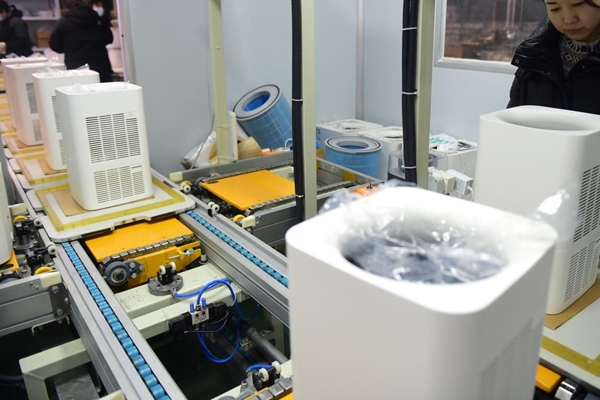
The assembly line uses a dual-track roller conveyor system built from aluminum extrusion profiles. This material choice provides excellent strength-to-weight ratio and corrosion resistance. The blue segmented rollers along the track edges are precision-molded from high-density polymer, minimizing friction while maintaining stable pallet positioning throughout production.
1.2 Workstation Layout
Yellow workstation platforms are positioned at intervals along the conveyor. These ergonomic staging areas are height-adjustable and equipped with integrated tooling fixtures, enabling rapid reconfiguration when switching between product variants.
1.3 Pallet Transport System
Each air purifier chassis rides on a dedicated yellow pallet carrier. These pallets feature locating pins and contour-matched recesses that ensure precise, repeatable positioning. The palletization strategy protects finished surfaces, maintains consistent orientation, and allows buffer accumulation between stations.
2. Process Flow
2.1 Station Progression
The production sequence follows a logical flow from chassis preparation through final quality verification. Initial stations handle internal structural components including fan housings, motor brackets, and control module enclosures. Mid-line stations address filter system integration using cylindrical HEPA and activated carbon elements.
2.2 Component Handling
White rectangular units on the conveyor represent product enclosures at various completion stages. The vented side panels are molded from ABS polymer for dimensional stability and flame retardancy. Assembly operators install sub-assemblies, establish electrical connections, and perform functional tests at each station.
2.3 Surface Protection
Partially assembled units remain wrapped in polyethylene film until final inspection. This prevents particulate contamination and surface damage during manufacturing, critical for consumer-facing products where appearance directly influences market perception.
3. Control Infrastructure
3.1 Pneumatic Systems
Blue pneumatic tubing routed beneath the conveyor deck supports compressed air systems for actuation and tooling. Pneumatic clamping fixtures, automated screw-driving stations, and component pressing mechanisms all draw from this distributed network. Tubing is secured with cable carriers and strain-relief fittings to prevent abrasion and pressure loss.
3.2 Indexing Mechanism
Pneumatic stopper cylinders beneath the conveyor frame enable precise pallet indexing. These momentarily halt movement to provide operators with a stable, vibration-free work environment during assembly.
4. Operational Philosophy
4.1 Balanced Automation
The line leverages operator dexterity for complex, variable tasks while using automation for repetitive, precision-critical operations. Skilled technicians at each station enable real-time defect detection and immediate process adjustment.
4.2 Embedded Quality Assurance
Each workstation functions as a quality gate. Operators verify predecessor work before adding value, preventing defect propagation and reducing costly rework at line end.
5. Key Technical Specifications
| Component | Material / Type | Function |
|---|---|---|
| Conveyor frame | Aluminum extrusion profiles | Structural support, corrosion resistance |
| Rollers | High-density polymer | Low-friction product transport |
| Workstation platforms | Yellow adjustable units | Ergonomic assembly staging |
| Product pallets | Yellow carriers with locating pins | Secure chassis positioning |
| Enclosure material | ABS polymer | Dimensional stability, flame retardancy |
| Pneumatic tubing | Blue routed lines | Distributed compressed air supply |
| Stopper cylinders | Pneumatic type | Precise pallet indexing |
6. Conclusion
This air purifier assembly line addresses the dual imperatives of production efficiency and product quality. Thoughtful conveyor design, ergonomic workstation layout, and systematic process segmentation achieve the throughput required for competitive market positioning while maintaining the precision and cleanliness standards that air purification products demand. As indoor air quality gains prominence in consumer awareness, this manufacturing infrastructure provides the scalable, reliable production capacity needed to serve expanding global markets.