
Introduction to the Assembly Line System
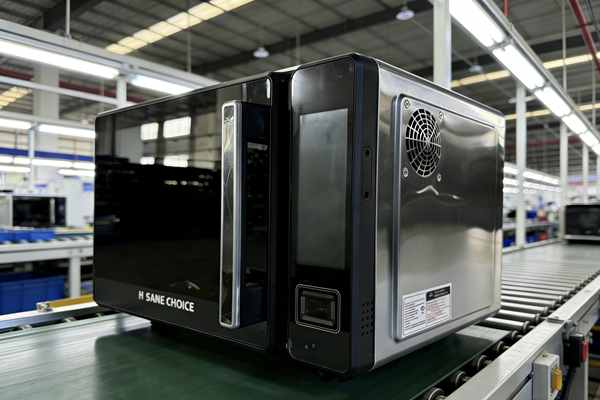
The image captures a sophisticated oven assembly line in operation, showcasing the culmination of decades of industrial engineering evolution. This particular conveyor system represents a state-of-the-art manufacturing solution designed for high-volume appliance production. The assembly line visible in the photograph employs a roller conveyor mechanism, where products move sequentially through various workstations, each dedicated to specific assembly phases. This systematic approach transforms individual components into fully functional household appliances through a meticulously orchestrated process.
Conveyor System Architecture
The conveyor infrastructure forms the backbone of this manufacturing operation. The roller-type conveyor visible in the image provides several distinct advantages over alternative transport systems. Unlike belt conveyors that may accumulate debris or require frequent tension adjustments, roller conveyors offer superior durability and reduced maintenance requirements in heavy-duty applications.
| Feature | Description | Benefit |
|---|---|---|
| Green surface coating | Non-slip interface with chemical resistance | Product stability, workplace safety |
| Modular design | Configurable sections for different products | Flexible production adaptation |
| Overhead framework | Integrated utility distribution | Supports pneumatic tools and monitoring |
The green surface coating on the conveyor bed serves multiple purposes. It provides a non-slip interface for product stability, offers chemical resistance against lubricants and cleaning agents, and contributes to workplace safety through high-visibility color coding.
The conveyor’s modular design allows for flexible configuration based on production requirements. Sections can be added, removed, or reconfigured to accommodate different product dimensions or assembly sequences. This adaptability proves particularly valuable in appliance manufacturing, where product lines may vary significantly in size and complexity. The overhead structural framework, visible in the background, supports integrated utilities including compressed air lines, electrical distribution, and data communication networks essential for powering pneumatic tools and monitoring systems.
Workstation Design and Ergonomics
The assembly line incorporates carefully engineered workstations positioned at intervals along the conveyor path. Each workstation represents a specialized production cell where trained technicians perform specific assembly operations. The ergonomic considerations evident in the line design include appropriate working heights, adequate lighting systems visible in the ceiling structure, and organized material staging areas. These elements collectively minimize operator fatigue while maximizing throughput efficiency.
| Ergonomic Element | Purpose | Outcome |
|---|---|---|
| Appropriate working heights | Reduce physical strain | Lower operator fatigue |
| Adequate ceiling lighting | Improve visibility | Higher assembly accuracy |
| Organized material staging | Minimize reaching | Faster cycle times |
The spacing between workstations follows calculated takt time principles, the rate at which products must be completed to meet customer demand. This mathematical approach to line balancing ensures that no single workstation becomes a production bottleneck. The image reveals sufficient lateral space around the conveyor, enabling material handlers to replenish components without interfering with ongoing assembly operations.
Quality Integration and Process Control
Modern assembly lines integrate quality control checkpoints directly into the production flow rather than relegating inspection to terminal stages. The oven unit positioned on the conveyor likely represents a stage where functional testing occurs, perhaps verification of heating elements, control panel calibration, or door seal integrity. This inline quality approach enables immediate defect detection and correction, preventing the accumulation of value in non-conforming products.
The visible control interface on the oven’s side panel suggests programmable logic controller integration, where automated systems manage conveyor speed, workstation signaling, and production data collection. Such digital integration facilitates real-time production monitoring, enabling supervisors to identify efficiency variations and implement corrective measures promptly. The data infrastructure supports continuous improvement methodologies fundamental to lean manufacturing philosophy.
Material Flow and Logistics
Efficient assembly line operation depends critically on synchronized material supply systems. The blue storage containers visible in the background indicate organized component staging, likely following kanban replenishment principles where consumption triggers resupply. This just-in-time approach minimizes inventory holding costs while ensuring uninterrupted production flow.
| Assembly Stage | Components Added | Key Operations |
|---|---|---|
| Chassis installation | Frame, base structure | Fastening, alignment |
| Electrical mounting | Wiring, control boards | Connection, routing |
| Insulation placement | Thermal barrier materials | Positioning, securing |
| Heating element integration | Burners, heating coils | Mounting, testing |
| Exterior panel attachment | Doors, side panels | Fitting, finishing |
The assembly sequence for an oven typically progresses from chassis installation through electrical component mounting, insulation placement, heating element integration, and finally exterior panel attachment. Each stage requires specific tooling, fixtures, and expertise. The line layout must accommodate these sequential dependencies while optimizing the physical flow of both products and materials.
Manufacturing Excellence and Industry Standards
Contemporary assembly line design must satisfy multiple regulatory frameworks including electrical safety standards, electromagnetic compatibility requirements, and energy efficiency directives. The manufacturing environment depicted maintains appropriate standards for electrical appliance production, with proper grounding infrastructure, electrostatic discharge protection, and controlled atmospheric conditions where necessary.
| Regulatory Area | Requirement | Implementation |
|---|---|---|
| Electrical safety | Proper grounding | Grounding infrastructure |
| Electromagnetic compatibility | Emission control | Shielding, filtering |
| Energy efficiency | Consumption limits | Optimized components |
The stainless steel and black finish of the oven unit reflects aesthetic considerations increasingly important in consumer appliance markets. Assembly lines must therefore incorporate finishing operations, including surface treatment, graphic application, and protective packaging, without compromising production efficiency. The visible branding element indicates that manufacturing processes must maintain consistency sufficient for brand identity preservation across production volumes.
Conclusion
This assembly line exemplifies modern manufacturing’s synthesis of mechanical engineering, ergonomics, and information technology. The conveyor system serves not merely as transport infrastructure but as the physical manifestation of production strategy, translating design specifications into tangible products through systematic, repeatable processes. As manufacturing continues evolving toward greater automation and digital integration, the fundamental principles embodied in this assembly line, including sequential processing, quality integration, and continuous flow, remain foundational to industrial production efficiency. The facility captured in this image represents not just a production site, but an engineered system where human skill, mechanical precision, and organizational methodology converge to deliver consumer products meeting exacting standards of quality and reliability.
Email:[email protected]